
Year by year history and photos of the Plymouth Valiant
Information is from The Standard Catalog of Chrysler (click on that link to buy the book on-line!) with additions by Dan Stern and Bill Watson and from the Plymouth Bulletin. This only covers United States Valiants and Valiants exported to Australia. We have a section for Canadian models and one for South American models. Years are model years and not calendar years.
Thanks to Jeff Godshall, Jim Benjaminson, and Lanny Knutson for permission to reproduce their Plymouth Bulletin articles.
First generation: 1960 Valiants
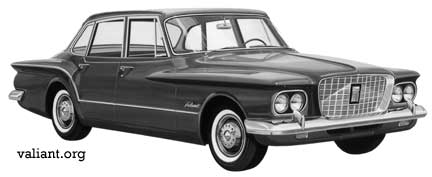 The Valiant was introduced in 1959 as a 1960 model. During its first sales year, 146,792 Valiants were sold -- dwarfing the Fury's 82,030 sales. Weighing in at 2,635 to 2,860 lb, these "Q" series Valiants sold for between $2,033 and $2,860 (the most expensive model cost $1/pound).
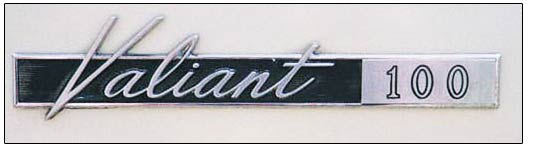
The first Valiants were sold as a separate line, along the pattern of DeSoto and Imperial; within the Valiant line were the V-100 and V-200. Both featured a unitized body and torsion bar front susension; the sole powertrain was the then-new 170 cid Slant Six with a single-barrel carburetor. In their early years, there were convertible, station wagon, and two-door hardtop versions as well as the standard four-door sedan (two-doors started in 1961, convertibles in 1963).
Jeff Godshall wrote in the Plymouth Bulletin: During the 1960 model year, two spring colors were offered: Valiant Light Blue and Valiant Light Green. At Chrysler, the stylists called the colors "kitchen blue" and "kitchen green." These additions brought the number of Valiant colors up to eight, with the original colors being blue, green, silver, white, black, and red. All eight colors were available on all V100/V200 sedans and suburbans, except for the red, which was restricted to V200 models only.
To cost-reduce the car somewhat, mid-year the inner only bright metal circular ring molding on the "doughnut" deck lid was deleted. I've also heard that the black paint of the bright headlight doors was deleted, leaving them all bright, as on the 1961 Valiant taxi and the 1962 line (except Signet). This deletion, however, I cannot confirm.
On the early 1960 Valiants, the windshield and backlight mouldings were actual bright metal pieces attaches over the black weatherstrip. During the model year, these separate mouldings were replaced by black weatherstrip which had a bright mylar plastic strip inset into the weatherstripping. This practice was cheaper than the metal mouldings while still giving an upscale "bright metal" look. This new mylar weatherstripping was continued after the model year.
1961 brought few changes; the Valiant became "just another Plymouth," a Dodge version (the Lancer) was brought out, and the new 225 cid Slant Six was made an option, mid-year, on the V-200. Sales declined slightly to 143,078 but stayed strong. An aluminum 225 became an option in late 1961 production, stayed as an option in 1962, and was dropped very early in 1963.
1961 saw the new 2-door sedan and hardtop versions, and was the last year for 3-seat (9 passenger) wagons. Two-seat wagons remained through 1966 in North America and through 1981 in Australia.
Jeff Godshall wrote in the Plymouth Bulletin: In the spring of 1961, buyers in four unnamed southern states were offered a "Dixie Special" Valiant sedan, painted Confederate Gray metallic and sporting a symbol on the door commemorating the War Between the States.
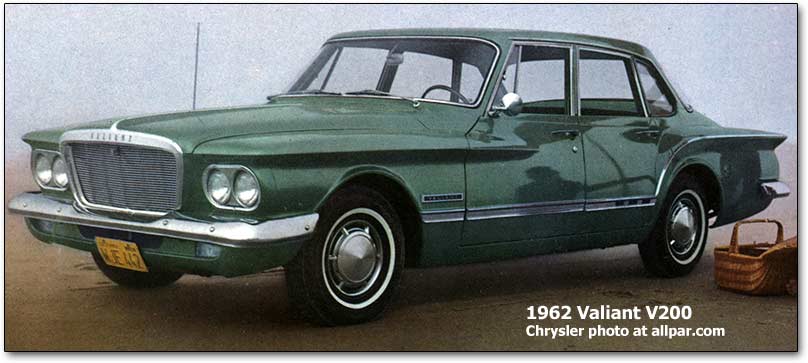
1962 brought the Signet nameplate to the 2-door hardtop version. The Signet was to remain as a high-end version of the Valiant. 154,294 V-100s, V-200s, and Signets were sold. This was also the first year for bucket seats (on the Valiant Signet 200 and the Lancer GT).
Tom McCahill tested the 1962 Valiant for Mechanix Illustrated, noting the addition of the 225 slant six, which “with some hop-up treatment, can turn the car into a true bomb.” He also wrote, though, that while helpful for heavy loads, “due to an unfortunate choice of gearing, the undoctored bigger engine runs out of rpm too soon to be considered a full high performance package.” He found 0-50 in 9.3, 0-60 in 13.0, 50-70 in 7.0, and top speed over 100 mph (with the three-speed manual). With the little 170, the situation was much worse: 0-60 in “the better part of 20 seconds.” McCahill also noted that in 1961, the Valiant had swept the field at Daytona in the compact class.
McCahill’s take on the Signet 200 was “a two-door hardtop with beautiful bucket seats, lush carpeting, and deluxe trim which makes it as foreign-looking as Chiang Kai-Sheck leading a St. Patrick’s day Parade... it has a built-in intrigue... looks-wise the Valiant is a bold stand against planned bashfulness that is designed not to offend or excite anyone.”
In the end, he wrote, “The Valiant is one of my pet compacts. With its excellent roadability and accurate steering it is a hard choice to beat. It has some real comfort, just about as much as most people should ever want. It also offers good brakes.” He did say it would be better with 15” wheels instead of the stock 13” wheels, and with a bigger carb.
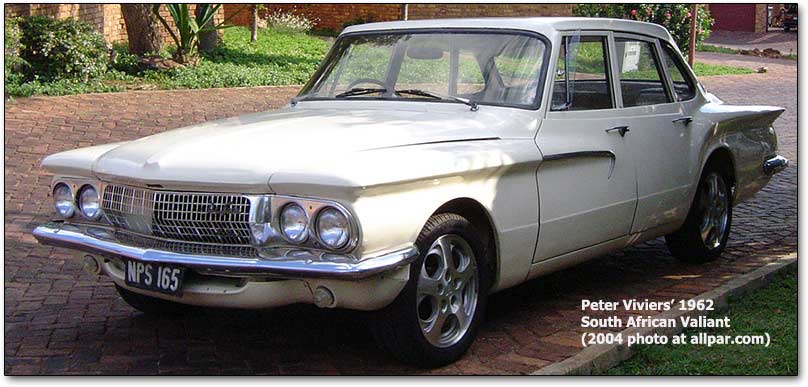
Bill Watson wrote: The bucket seats of the 1962 models were narrower than those used in 1965. (Don't know about the 1963 and 1964). I also own a 1965 Signet and the seats are wider, with the seat bolts farther apart. In addition, the bolt on the driver's seat closest to the transmission is set back a few inches. While my 1962 Valiant seats will change from side to side, the 1965 seats will not.
As to moving the seat, note that Chrysler cars have "U" shaped reinforcements where the seat bolts go through the floor. Undoubtedly this is for reinforcement and safety reasons. One thing I have done (I am 6'2") is to raise the seats. You can do this by putting a nut and washer on the seat bolt before installing the seat. This will raise the giving you more leg room - and some thigh support. Chrysler compacts were not stingy with head room so it may be a viable alternative to drilling holes in the floor. (Black and white photos courtesy of the Plymouth Bulletin.)
Jeff Godshall wrote in the Plymouth Bulletin: In the spring of 1962, Valiant V200 two and four door sedans were offered with a Valiant "Color Sweep" in eight two-tone color combinations, advertised as "the first split-level color accent in Valiant history." On these cars the secondary, lighter color appeared below the body side molding on the front fender, doors, and quarters and then below the deck lid opening and below the rear bumper. Cost was $19.95, with shipments beginning February 1, 1962.
Jim Benjaminson wrote in the Plymouth Bulletin: This year's model had more unique features than either of the two predecessors, including a new grille and grille shell bearing the Valiant name, wider side trim, and new round taillights residing below the capped-off canted "fins" which had previosly housed taillights. And, the "toilet seat" was gone! The fake spare tire impression on the deck lid, one of Virgil Exner's trademarks, was replaced by a large circular "Plymouth" nameplate. In Canada this plate read "Valiant." Since the car was also sold by Dodge dealers, the Plymouth name appeared nowhere on the car.
A new instrument panel bearing printed circuits was introduced on the Valiant as on other Chrysler models. The floor shift of the previous years was replaced by a new concentric column shift also featured on other '62 Mopars. Engines available remained the 170 and 225 cubic inch slant sixes. Now, however, the 225 was also available with an aluminum block. Much ballyhooed, as were the aluminum engines of other makers, the light metal slant six did not prove to be very popular. It would be a rare find for a collector today.
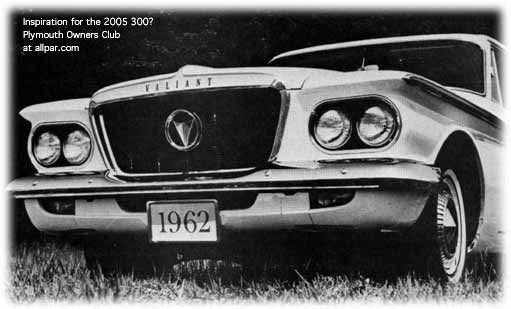
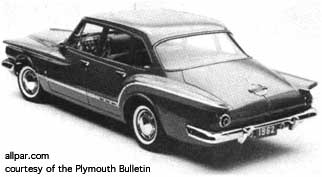
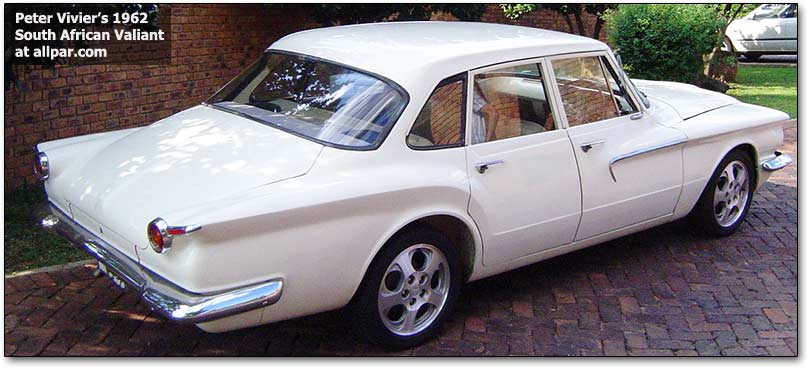
1963 saw a boost in sales to 225,056 (more than Plymouth's 1998 total sales) due to a restyling. The Dodge Lancer was replaced with the extended-wheelbase Dodge Dart.
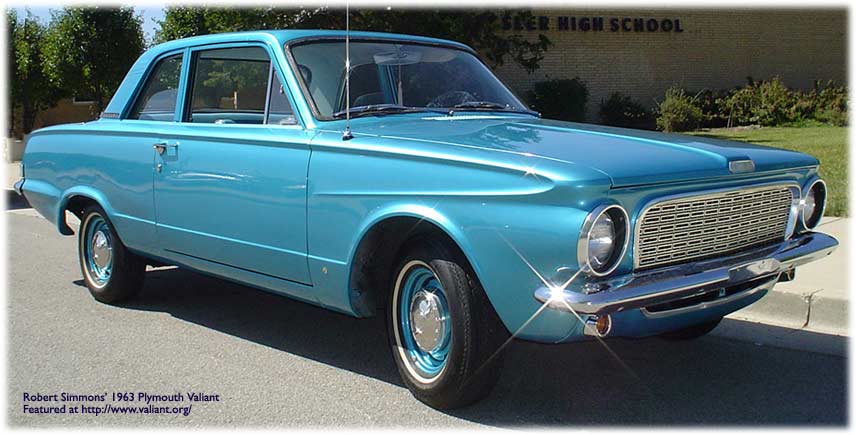
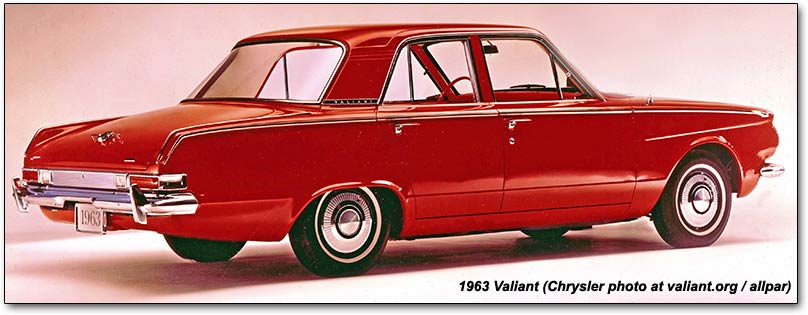
1964 saw another increase in sales, to 227,585 (US only): the pinnacle of Valiant sales (unless Duster or Barracuda models were added in).
We now have a full 1964 Valiant page!
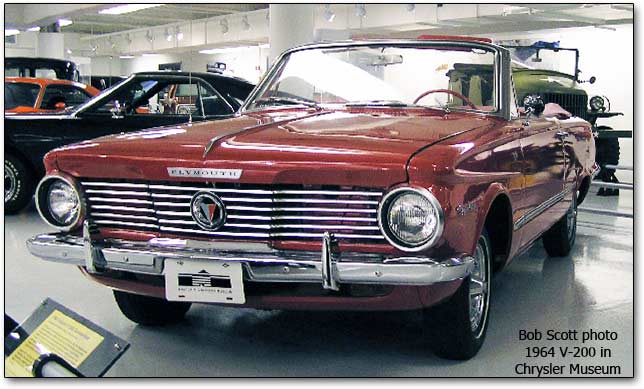
1965 (well, really, 1964, but the 1965 model year) saw the first Barracuda - as a member of the Signet line. A four-barrel 273 because an option on the V-200, offering more power than the prior two-barrel, in a rare instance of Chrysler giving an engine the carburetion it called for. 167,153 Valiants were sold, not including 64,596 Barracudas.
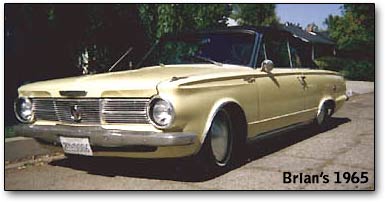
1966 saw the end of the V-200 convertible and lower sales of 138,137 Valiants and 38,029 Barraudas.
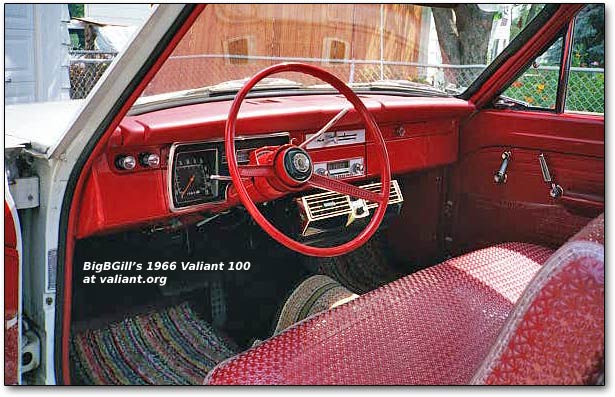
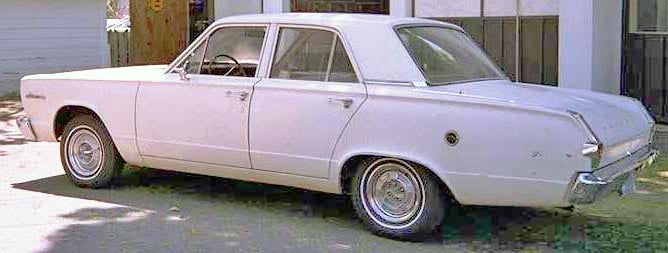
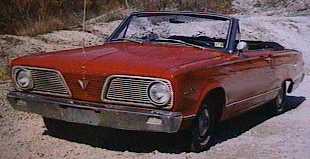
Second generation: 1967 Plymouth Valiants
Consumers Guide wrote about this generation in 1981:
Perhaps Chrysler Corporation’s best line before front-drive... generally outstanding reliability record, which enhances the practical nature of the design itself. Scores for passenger room, outward visibility, handling, trunk space, and ease of maintenance. Ride a little stiff, but not bouncy... Good, though not spectacular gas mileage... old-fashioned but a lot of transportation value at an attractive price.
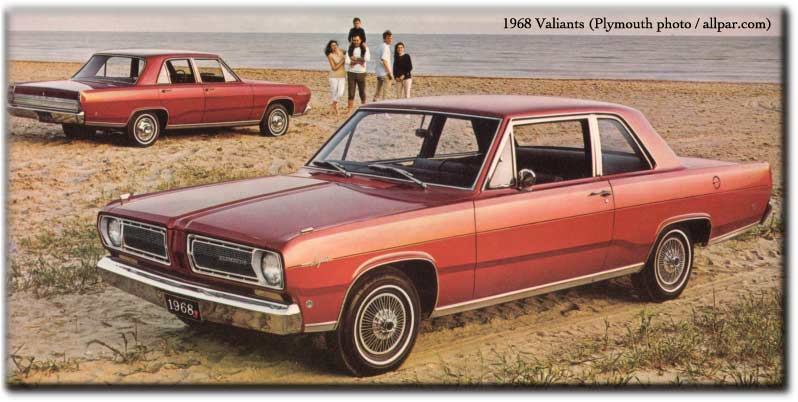
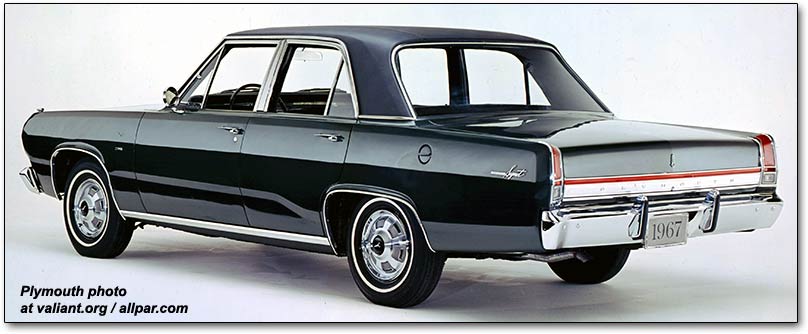
In 1967, Plymouth brought in new bodies to carry the Valiant line to its end. The Barracuda became a separate model, and the V-200 was dropped (though the Signet 200 remained).
108,969 Valiants were sold in this year. See the 1967 Valiant, Dart, and Barracuda page.
1968 brought the 318, a larger version of the 273, to the Valiant, for sales of 110,825. The 318 was a mainstay of Chrysler rear wheel drive vehicles through to 1997, when it could still be found pushing Grand Cherokees, Dakotas, and Rams.
Extensive 1968 Valiant car and engine specifications
The Plymouth press release quoted Robert Anderson, Chrysler-Plymouth general manager, as saying, “We have improved both the operating economy and the styling and continued the comfort and ease of handling.” The 1968 Valiant, which went on sale September 14, 1967, continued the 115 hp slant six, Torqueflite, and 2.76 rear axle ratio that helped it to win the Mobil Economy Run in 1967 (against 41 competitors). The optional 145 horsepower six used the same ratio. The 273 V8 gained hydraulic valve lifters and a modified combustion chamber which increased horsepower to 190 while increasing mileage. New for 1968 was the 318 V8, with 230 horsepower (all figures are gross, not net).
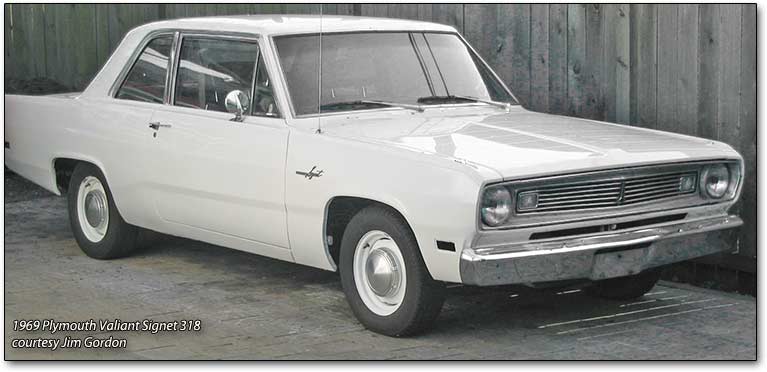
Despite the 318, 1969 sales fell to 104,575. Something needed to be done, and, in a move unusual for Chrysler in later years, something was...a wildly successful new model was developed...one which was pretty much identical from the cowl to the front bumper...
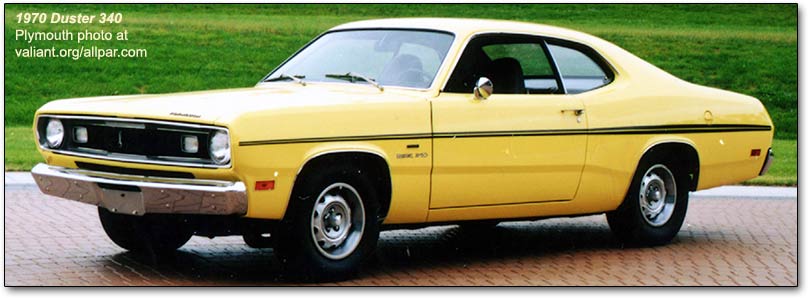
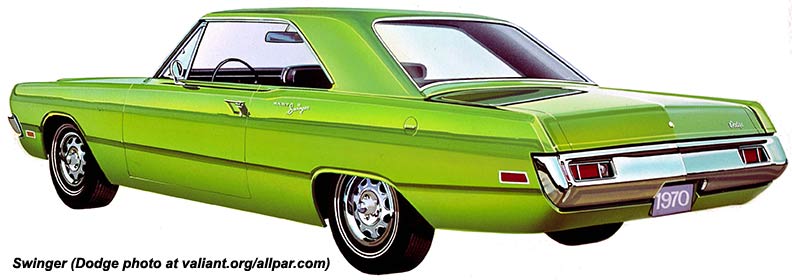
Which was a far cry from the Dodge version, a barely-restyled four-door Valiant/Dart...
1970 brought the phenomenally successful Plymouth Duster. In its first year, this Valiant derivative sold 193,375 units, nearly double the Valiant's prior year sales. Priced at $2,172 to $2,283, weighing in at 2,790 to 2,865 lb, the new Duster was simply a more sporty-looking Valiant, with rear curves to counter the front angles. The Valiant itself sold only 50,810 units — half what it had in 1969 — but the lines were busily pumping out the Dusters, getting the volume needed for a profit.
 A new 198 slant six replaced the 170 as the base engine across the board.
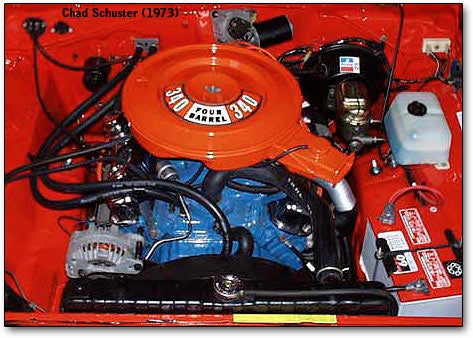
One of the best speed cars of the era was also born in 1970: the 340 Duster, a separate model that included a three-speed floor shift, a new instrument panel, high rate torsion bars, performance springs and shocks, disc brakes, and a front antisway bar. Today those might sound like standard equipment, but in 1970, they were not!
Selling for $2,547, weighing 3,110 lb, and outperforming many big blocks, the 340 Duster sold 24,817 units. The 340 engine was not merely an overbored 318, but was designed for performance model.
The Barracudas left the A family in 1970, but received 383, 426 Hemi, and 440 (including a 6-pack) engine options. It was a fish to be reckoned with.
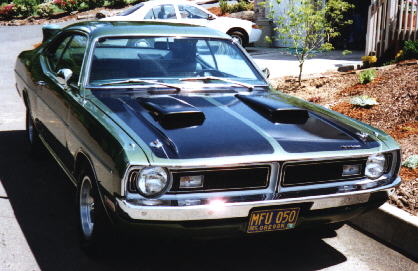
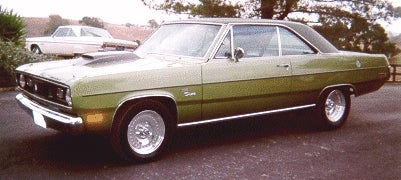
1971 added the Scamp, basically a Swinger with a Valiant grill; it was on a longer wheelbase than the Valiant (as was the Dart-based Swinger). The Duster losts its Valiant nameplate entirely, probably due to its outstanding success. The Valiant lost some ground, with 42,660 units, but 173,592 Dusters and 48,253 Scamps were sold. An additional 12,886 340 Dusters were built. 1971 also saw the final loss of the 170 Slant Six.
 |
 |
|
| "Gazguzlr's" Dodge Demon, inside and out | XE Ryder's 1971 Scamp |
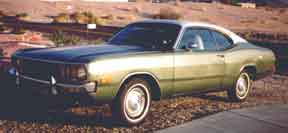 1972 saw new variety in the Duster line, with Twister and Gold Duster packages. The Twister was essentially a cartoon decal, paint, and stripe job, while the Gold Duster added decals. Valiant sales went up to 52,911; Duster sales soared to 212,311; Scamp sales went up to 49,470; and 15,681 of the economy big block buster 340 Dusters were sold.
A planned restyling, set up in 1970, would have softened the lines of the Valiant, Duster, Dart, and others; it had been cancelled due to financial problems. However, electronic ignition became available as an option on V8s. We have a huge level of detail on the 1972 Dart, Demon, and Swinger, which were similar to the Valiant, Duster, and Scamp.
In 1973, Valiant sales went up again (though not to their earlier days) to 61,826; 249,243 Dusters, 53,792 Scamps, and 15,731 340 Dusters were churned out for a total of 402,805. Lanny Knutson wrote noted the final major front clip change, to the "formal" appearance, with a massive bumper assisted by large rubber guards designed to meet more stringent protection requirements. Large single-unit taillamps were shaped to flow with the Duster's rear sheet metal contours. while other Valiants remained unchanged from the rear. The Space Duster and Special Coupe appeared, the Space Duster reviving the folding rear seat and carpeted trunk and cargo space to extend to 6.5 feet (from the Barracuda); a sliding sun roof was optional. The Special Coupe was intended to be a luxury Duster; it included the Space Duster feature. The standard six was the 198, reduced to 95 horsepower. 2,614 hardtops were reportedly built for Canada, although no proof of their existence is found in Canadian sales literature.
In case you were wondering, a brand new Dodge Dart Swinger (mine) cost $2,617 in 1973, and included dual horns, electronic ignition, carpets, rear armrests with ashtrays, and extra mouldings.
A $420 merchandising package added the automatic ($180), vinyl roof ($76), power steering ($93), big wheel covers that liked to slip around and cut off the tire valves ($25), remote control driver's side mirror ($12), AM radio ($60), variable speed wipers ($10), day/night mirror ($7), deluxe insulation ($34), bumper guards ($15), light package ($29), whitewalls ($26), wheel lip mouldings ($7), and sill mouldings ($11).
Mine also had manual disc brakes ($22) which required considerable foot effort, the bigger slant six ($38), tinted glass ($36), air conditioning ($358), and bigger D78 x 14 tires ($14). With a $109 destination charge - Plymouth charged $65 to get a Satellite to New York in the same time period - the total was a whopping $3,615, putting the Swinger well into Satellite Sebring territory.
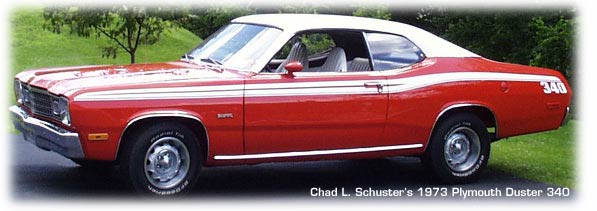
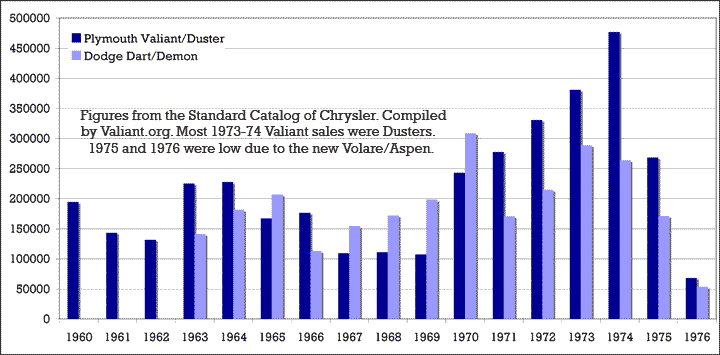
1974 brought new, more usable seat belts, a larger Valiant sedan (based now on the Dart/Scamp wheelbase), the Space Duster, new front and rear treatments, interiors, and options were introduced, bringing the Valiants and its cohort to pretty much the same appearance they would have in their final days. The Duster 340 was replaced by the Duster 360, which did not require the same premium fuel and could meet emissions standards.
Valiant sales more than doubled to 127,430; Duster sales soared to 277,409; and Scamp sales rose to 51,699. The new Valiant Brougham, a luxury package, sold 16,311 units in its first year. The Duster 360, though, with less thunder than the 340, only sold 3,969 units.
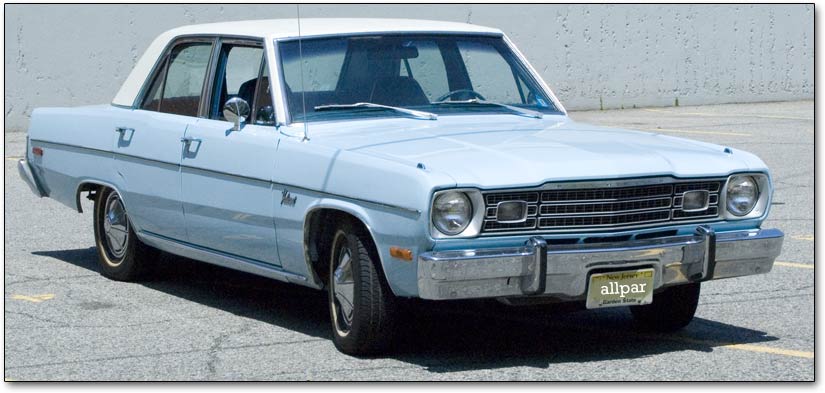
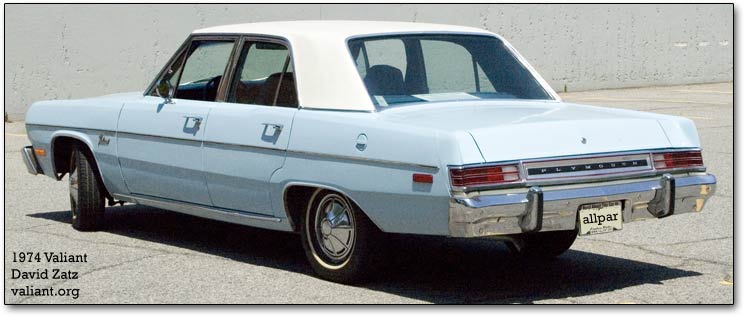
In 1975, with the design of the Volare and Aspen nearly complete, the Valiant saw new fuel economy upgrades, including a tighter torque converter, radial tires, lower gear ratios, and a Fuel Pacer system. An unlimited mileage, one year warranty was brought out. 118,532 Valiants were sold; 120,131 Dusters (including 360s) went out the door; and a new low of 29,362 Scamps were made. A few (123) Valiant taxis were sold, and 1,302 Valiants were made for the export market. See our full coverage of the 1975 Dart and Swinger - Valiants were very similar! In this, their last year, the Chrysler compacts had a 28% share of the American compact car market.
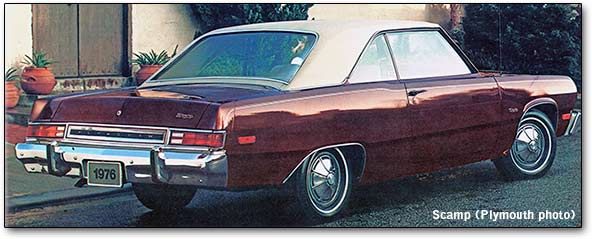
The Brougham was increasingly popular with people downscaling from higher-end cars to get better mileage. The package was mainly cosmetic, with color-keyed carpeting, velour seats (bucket or bench), “luxury door trim panels,” poorly-simulated woodgrain dashboard inserts, carpeted trunk, better sound insulation, day/night mirrors, molding sills, vinyl side moldings, drip rails, and deluxe wheel covers. Radios remained optional.
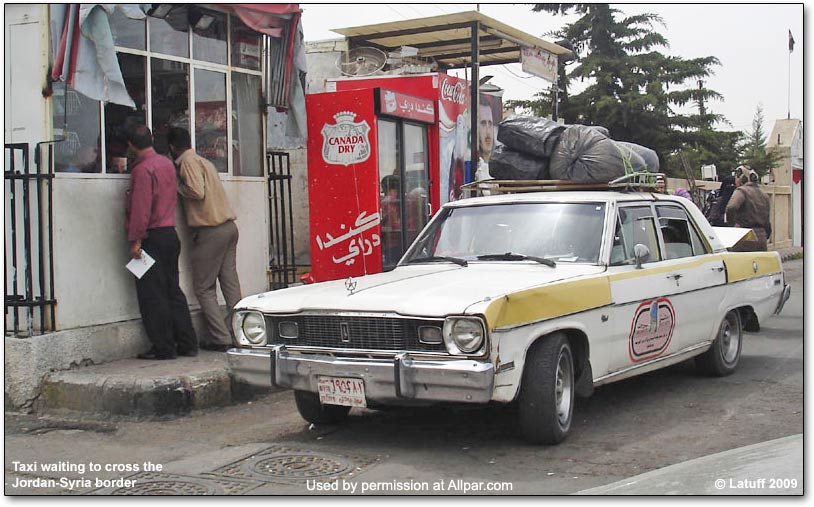 Thanks to Mr. Latuff for permission to use this photo, taken in 2009. This appears to be a 1975 model with a 1980s hood ornament replacing the original one. Note the Mopar-OEM locking gas cap. Bumper guards were standard.
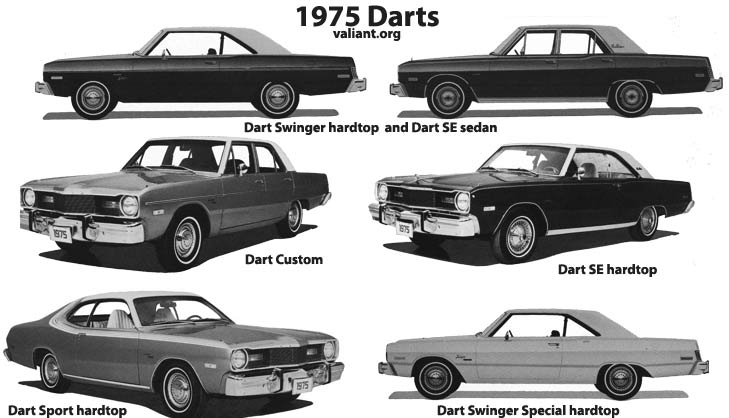
The following is by Lanny Knutson. Copyrighted by the Plymouth Bulletin. Reprinted by permission.
The star of Plymouth's lineup continued to be its redoubtable Valiant. It was getting quite long in the tooth with sedan and hardtop coupe bodies introduced on the Dodge Dart in 1970 (which, in turn, were restyled '67s) and the Duster coupe also of 1970 origins. Although the A-bodied Valiant easily outsold its B- and C-bodied siblings combined in 1975, its sales dropped almost a third from 1974 when one in four compact cars sold in the United States was a Valiant.
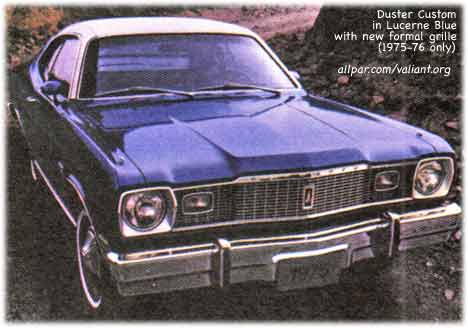
A new fine-mesh grille was designed for all Valiants. Since the compact was attracting normally larger car buyers seeking improved fuel economy, Plymouth loaded the premium Brougham sedan with even more luxury appointments. A new Valiant Custom sedan offered a trim level between the Brougham and the base sedan.
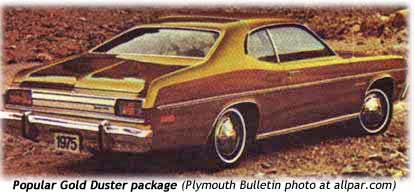
The Duster Custom brought similar luxury to the sport coupe line. The full-length rocker and taillight panels that decorated the Custom were optional on other Dusters. The Gold Duster returned as a special trim packaged car. The Space Duster Pak continued to provide fold-down rear seat access to the trunk. For the second year, the high-performance coupe was called the Duster 360 after its four-barrel, 245 net horsepower engine.
Radial tires, a fuel-pacer system, a tighter torque converter helped increase the fuel economy of the Valiant as well as the rest of Plymouth's 1975 line.
Third generation: Valiants and Darts become Volares and Aspens
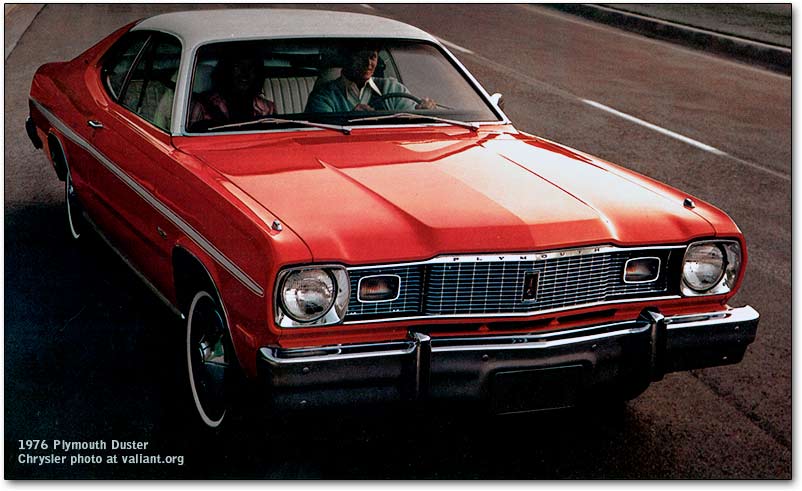
1976 was the Valiant's final year in the US. In what many saw as a major mistake for Chrysler, under the leadership that saw no use for the Barracuda or Road Runner (or small cars in Australia), (or the Australian Hemi Six in the US), the Valiant was eliminated in favor the Aspen and Volare, two unproven and severely undertested vehicles whose production should have been delayed by a year. Had the Valiant been alone in 1976, and the Volare/Aspen not brought out that year, Chrysler might have made it without having to sell their overseas assets and other divisions.
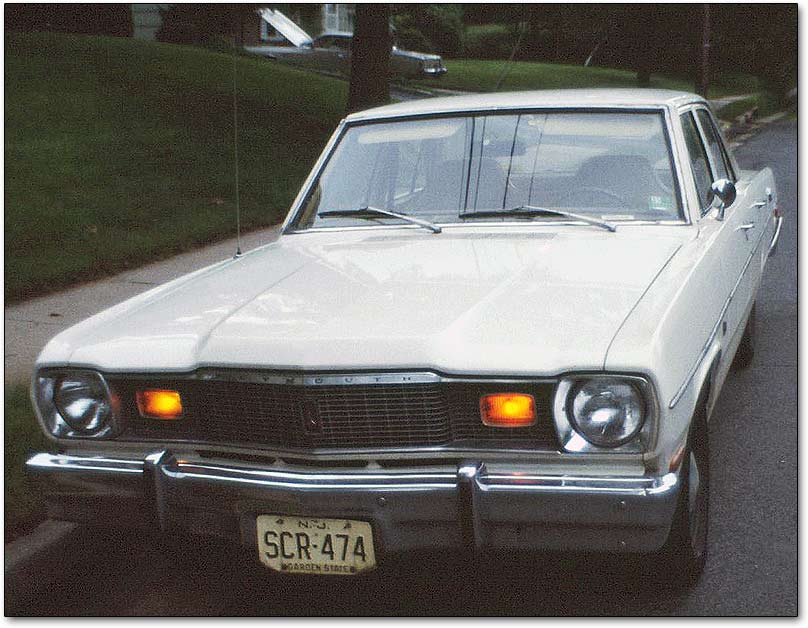
Valiant sales were tiny in 1976 due to their simultaneous replacement by the Volare/Aspen: 32,901 units. The only visible change was the substitution of clear bulbs with yellow covers for the front parking/turn signal lights, rather than yellow bulbs with clear covers. There were minor engineering changes, and new trim packages, the most significant of which was the Feather Duster.
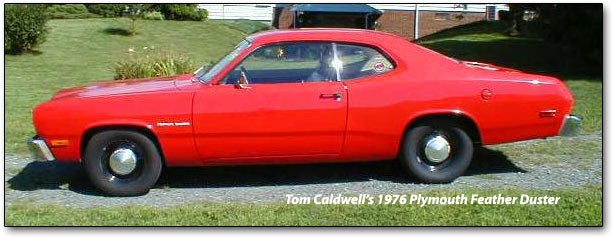
The Scamp sold a mere 8,455 units in its final year, and the Duster, in its last year as an A-body, eked out 26,688 units despite the addition of the Feather Duster. This rarity was designed for fuel economy, and contained an aluminum intake manifold, hood and trunk inner bracing, and bumper brackets. It also had long axle ratios and an overdrive manual transmission coupled with the 225 Slant Six.
Jim Benjaminson wrote in the Plymouth Bulletin:
Like the First Series 1949 P15 series, the '76 Valiant existed only to fill the gap until its replacement was ready. Hence, the only change was downsizing of offerings.
The Duster series consisted only of trim packages, most notably the Feather Duster. Taking a cue from its lightweight name, the Feather Duster package consisted of an intake manifold, inner hood and deck panels in aluminum, and a high geared rear axle ratio for a specially tuned 225 engine. Buyers wanting even more economy could order a manual overdrive four-speed transmission with an aluminum case.
The Silver Duster replaced the time-honored Gold Duster with unique red/black strips outlining the lower body character line matched by red vinyl or optional Boca Raton cloth/vinyl interior. The Valiant sedan carried on with basic, Custom and Brougham models. The Scamp came out with a new lowline Scamp Special to accompany its basic and Brougham editions.
Valiant's most significant 1976 attribute may have been what Car and Driver discovered almost accidentally in its search for "The Fastest American Car." The fastest was the Corvette L82 at 124.5 MPH but the Dart Sport 360 (twin to the Duster 360) came in second at 121.8 MPH earning kudos as America's Fastest Sedan. Chrysler's ability to certify the vehicle without catalytic converters aided in the honors.
Thus, as Don Sherman reported, the oldest design of the group (with a chassis dating back to 1967) beat out the 455 Pontiac Trans Am, Ford Cobra II, and a 454-equipped Chevy pickup, a “strong number two.”
He then went on to credit another "attribute," its bland appearace, an ability to blend into traffic as if it were a lane divider. Not only was it the fastest sedan but it likely had the lowest ticket-summons potential of the group. But, he concluded that, after blowing the doors off Trans Ams, it could revert to its spinster status with a ride like that of a church pew.
With this final, unexpected repute as a speed demon, Valiant, its solid, dependable, econcomical reputation still intact, found it was time to bow out. Valiantly.
Car & Driver, 1976 Dodge Dart Sport Corvette L82 Trans Am Mustang II Cobra Engine 360 automatic 350 automatic 455 manual 302 manual 0-60 7.3 7.1 7.0 8.9 0-100 26.4 19.9 22.3 40.0 Quarter mile 15.7 @ 88.3 15.3 @91.9 15.6 @ 90.3 17.0 @ 78.0 Braking from 70 201 ft 195 ft 175 ft 214 ft C/D mileage 13.5 / 15.5 14.5 / 16.5 12.0 / 13.0 Not recorded Cost, as tested $4,825 $10,053 $5,722 $5,884 Weight 3,650 3,655 3,820 3,305

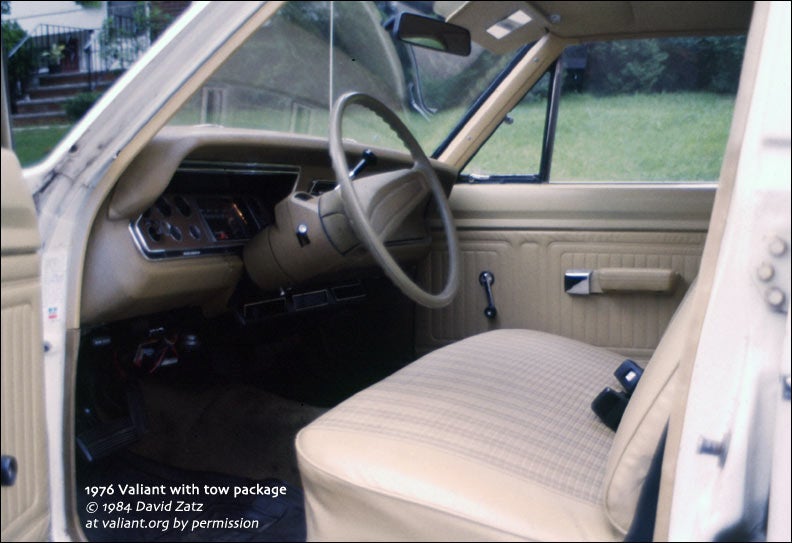
1980 saw the Valiant alive only in South America, where clever body panel changes enhanced its appearance and, presumably, its reputation. Finally, the last Dodge Dart was built, in 1981, in Brazil.
Also see: Development of the Valiant
Plymouth Valiant Family Sales (U.S., Not Including Dodge) - From The Standard Catalog of Chrysler.
 Your Privacy Choices